Blind to Justice: Smedema and Dutch Systemic Failures
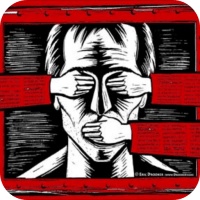 In order to analyze the "Blind voor Mens en Recht" (Blind to People and Justice) report [1] in relation to the Hans Smedema Affair, it's important to understand the report's main points and then consider how Smedema's allegations align with its findings.
The "Blind voor Mens en Recht" report, issued by the parlementaire enquêtecommissie Fraudebeleid en Dienstverlening (parliamentary inquiry committee on Fraud Policy and Public Service) investigated how the government combats fraud and the consequences for citizens [2]. The report highlights failures in the Dutch social security and benefits system, with a focus on the toeslagenaffaire (childcare benefits scandal) [2]. It concludes that the government was "blind" to the human impact and rights of individuals affected by its policies [3]. The report also found that fundamental rights were violated and the protection of the rule of law was not in place for the affected people [3].
Key findings of the report include:
- Flawed Legislation and Implementation: Poorly designed laws and regulations led to significant hardship [4].
- Presumption of Guilt: Individuals making errors were treated as fraudsters [5].
- Systemic Failures: State powers failed to protect citizens' rights [3].
- Violation of Privacy: The right to privacy was frequently violated through risk-based monitoring in social security and benefits, including the registration of nationality as a risk indicator [6, 7].
- Lack of Knowledge: There was a lack of knowledge about the content of laws and regulations at all levels [6].
- Limited Access to Justice: Citizens were hindered in their ability to defend themselves against the government, with limited access to information, legal assistance, and effective remedies [8].
- Influence of Public and Political Pressure: The report acknowledges the enormous pressure exerted by the media and the Parliament, who wanted to expose fraud [9].
Analysis of the Hans Smedema Affair in Light of the Report:
Hans Smedema's case, as he presents it, shares several parallels with the issues raised in the "Blind voor Mens en Recht" report. However, it is important to remember that Smedema's claims lack independent verification [10].Here's how the report's findings potentially relate to Smedema's allegations:
-
Systemic Failures and Lack of Redress:
Smedema's core allegation is that he has been unable to get justice or any kind of support within the Dutch system [11, 12]. He claims that police, justice officials, and even the courts have refused to investigate his claims properly, or have actively worked against him [11, 12]. The report describes the government being "blind" to signals from within and without, which corresponds with Smedema's claim of his signals being ignored for decades [3]. -
Obstruction of Justice and Due Process:
Smedema argues that he has been denied access to a fair trial, evidence has been suppressed, and witnesses have been intimidated [11]. The report mentions citizens being hindered in their ability to defend themselves against the government and limited access to legal assistance, which is in line with Smedema's experiences [8]. Smedema also claims that a judge refused to grant a DNA paternity test [13]. -
Role of Public Opinion and Media:
The report describes the enormous pressure exerted by the media and the Parliament [9]. Smedema alleges that the media has been unwilling to report on his case [14]. The report highlights the importance of access to information, legal assistance, and effective remedies, all of which Smedema claims to have been denied [8]. Smedema also sought validation and redress through media attention, but he alleges that media outlets refused to publish his story, potentially due to the sensitive nature of his claims and the involvement of powerful entities [14]. -
Impact on Personal Life:
The report speaks of "verwoeste levens" (devastated lives) as a result of the toeslagenaffaire [3]. Smedema describes his life and his wife's life being ruined, and attributes this to the actions of the Dutch state [15]. Smedema seeks rehabilitation after the exposure of the cover-up [16]. -
Complicity and "Doofpot" Culture:
Smedema alleges a "doofpot" (cover-up) culture within the Dutch government [17, 18]. The report doesn't directly address cover-ups, but its findings of systemic failures and a lack of accountability could contribute to such a culture. -
The Fred Spijkers Case:
Smedema draws parallels between his case and that of Fred Spijkers, a whistleblower who, according to Smedema, was destroyed by the Dutch state [19, 20]. The report references an academic study that concluded Spijkers' life was "devastated by the actions of political, administrative, judicial, and official authorities on behalf of the Dutch state" [20]. Smedema uses the Spijkers case to argue that there is a pattern of the Dutch government mistreating individuals who challenge the system [19, 20].
Points of Caution and Counterarguments:
- Unverified Allegations: It is crucial to remember that Smedema's claims are primarily based on his own accounts and interpretations of events [10]. The sources lack independent verification of his allegations [10].
- Complexity of the Case: The Smedema Affair involves a complex web of accusations, making it difficult to assess the validity of his claims.
- Mental Health: Smedema claims that he is intentionally portrayed as crazy so nobody will believe him [21].
- Alternative Explanations: It's possible that some of the events Smedema interprets as evidence of a conspiracy could have other explanations.
[caption id="attachment_38481" align="alignright" width="100"] Blog Content[/caption]
Google NotebookLM Plus Insights,
Lack of independent verification? Not true because there are about a hundred crucial evidence events, but nobody in two decades looked at it! Blinded by the State induced Delusional Claim! See the current Evidence Vault with the evidence used in the UNCAT petition and the specific evidence used in the Geweld Schadefonds claims:
Evidence (Bewijzen) Vault The Smedema Case!
based on the legal written statements on this Blog and eBooks by the victim Author:
Hans Smedema B. Sc., in forced exile surviving in beautiful 'El Albir', Costa Blanca, Spain